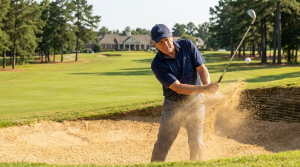

Adding distance becomes harder with age, but it’s far from impossible. Many seniors assume they can’t increase swing speed because strength, mobility, or flexibility have declined. In reality, the right swing speed training for seniors helps restore power without risking injury. You don’t need intense workouts or explosive movements. You only need efficient drills, simple mobility routines, and smart mechanics that help you move the club faster with less strain.
Swing speed depends on three things: technique, mobility, and coordination. Seniors can improve all three even if strength is limited. By training smarter—not harder—you generate more clubhead speed, longer carries, and improved consistency. Let’s explore swing speed training for seniors that safely boosts power and restores confidence in your long game.
Start with a Gentle Warm-Up to Protect Muscles and Joints
Warming up matters more as we age. Tight muscles limit speed and increase injury risk. Seniors gain immediate benefits from a warm-up that loosens key areas: hips, shoulders, spine, and wrists.
A helpful warm-up includes:
Light torso turns
Arm circles
Hip rotations
Toe touches
Gentle knee bends
Even two minutes makes a difference. When the body feels loose, clubhead speed becomes easier to create.
Improve Mobility to Support a Faster, Smoother Swing
Mobility directly influences your ability to rotate. Seniors often lose hip and thoracic (mid-back) mobility, which leads to shorter rotations and slower swings. Restoring mobility—just a little—adds effortless speed.
Simple mobility drills include:
Seated trunk rotations
Standing hip circles
Cat-cow spine extensions
Cross-body shoulder stretches
Hamstring stretches
These movements increase your turn and help you complete the backswing more fully. More turn means more stored energy, which leads to increased swing speed.
Use Lightweight Training to Build Speed Without Strain
Speed training works best when using light clubs or swing sticks. Seniors don’t need heavy tools. Light implements help train fast movement safely and effectively.
Try this simple routine:
Take 10 swings with a light club at 60% effort.
10 swings at 80% effort.
5–8 swings at near full speed while staying relaxed.
Rest between sets to avoid fatigue.
This progressive structure trains your nervous system to move faster without forcing power.
Focus on Tempo for Safe Speed Gains
Many seniors swing too quickly going back, then lose power coming down. A controlled backswing paired with a smooth, accelerating downswing increases speed safely.
Think of this rhythm:
Smooth going back
Faster moving down
Balanced at the finish
This tempo encourages natural speed without strain. Seniors who rely on rhythm rather than muscle instantly add distance.
Use Ground Forces to Add Power Easily
Swing speed training for seniors doesn’t come from the arms—it comes from the ground. Learning to use ground pressure helps generate energy without extra effort.
Here’s a simple drill:
During the downswing, press gently into your lead foot.
Feel the body rotating as the pressure shifts.
Let the hips turn through naturally.
This movement adds free power by using ground reaction forces. It works even for seniors with limited mobility.
Shorten the Backswing for Better Control and More Speed
A shorter backswing may seem like it reduces power, but for seniors it often increases speed. Shorter swings stay connected, balanced, and efficient.
A compact backswing:
Prevents over-rotation
Reduces timing errors
Keeps the club on plane
Allows faster acceleration through impact
Efficient swings beat long, inconsistent ones every time.
Strengthen the Core with Low-Impact Training
Core strength stabilizes the swing and supports rotation. Seniors don’t need intense workouts—just light, controlled movements.
Helpful core exercises include:
Seated knee lifts
Standing side bends
Bird dogs
Glute bridges
Pelvic tilts
These exercises strengthen the muscles responsible for rotating the body. A stronger core helps seniors maintain posture and create faster, safer swings.
Train Wrist Hinge for Added Clubhead Speed
A proper wrist hinge stores energy. Many seniors lose hinge because of stiffness or fear of mishits. Practicing controlled wrist set helps restore power.
Try this drill:
Take half swings while hinging the wrists gently early in the backswing.
Hold the angle briefly at the top.
Release naturally on the downswing.
This builds a smoother, more powerful release without forcing the motion.
Use Alignment Sticks or Clubs for Path Training
Swing path influences speed. Coming over the top slows the club dramatically. Seniors who practice a shallow, efficient downswing add speed without effort.
Place an alignment stick just outside the ball line.
Make slow swings that avoid hitting the stick.
Feel the club approaching from the inside.
A better path equals better speed and better contact.
Relax the Grip to Increase Swing Speed Instantly
Tension kills speed. Seniors often grip too tightly, especially with longer clubs. A lighter grip keeps the hands relaxed and allows the club to swing freely.
Try holding the club at a “3 out of 10” pressure level.
Let the wrists stay soft.
Feel the clubhead move naturally.
Relaxation is one of the fastest ways for seniors to increase speed safely.
Train Balance to Support Faster Motion
Balance declines with age, but a balanced swing produces more speed with fewer mishits. Training balance helps seniors swing faster while staying controlled.
Try simple balance drills:
Stand on one leg for 10–15 seconds.
Make slow practice swings with feet close together.
Use a chair for support if needed.
Better balance leads to stronger rotation and improved speed.
Use Overspeed Training Carefully and Safely
Overspeed training helps the body move faster than usual. Seniors can benefit from it when done gently.
Try these steps:
Swing a lighter club
Move at comfortable speed
Gradually increase pace over 2–3 weeks
Overspeed training activates fast-twitch muscles, helping seniors improve clubhead speed safely.
Finish in Balance to Confirm Proper Speed Control
A balanced finish shows that you created speed correctly. If you lose balance, your swing may be too long, too tense, or too forced.
Holding your finish for a few seconds builds strength and stability. It’s a simple indicator of a safe, efficient swing.
Conclusion
Swing speed training for seniors doesn’t require force, strain, or intense workouts. It relies on smart mechanics, gentle mobility work, light training aids, and relaxed tempo. Improving flexibility supports better rotation. Practicing efficient movements adds natural power. Using the ground, soft grip pressure, and compact swings creates safe acceleration. With the right approach, seniors can add distance, improve consistency, and enjoy a stronger long game without risking injury. Smart speed training brings confidence back to every tee shot.
FAQ
- Can seniors really increase swing speed?
Yes. With smart training and mobility work, seniors can safely gain speed at any age. - How often should seniors do swing speed training?
Two to three light sessions per week work well without overloading the body. - Do lighter clubs help with speed?
Absolutely. Lighter clubs promote faster movement and easier acceleration. - Is flexibility important for swing speed?
Yes. Better mobility supports fuller rotation and allows seniors to swing faster. - What’s the safest way to train swing speed?
Use slow-motion drills, light implements, and compact swings while staying relaxed.