Golf gloves for seniors are far more than a simple accessory. They are the quiet connection between your hands and the club, the point where feel, control, and confidence come together. When the glove feels right, the swing flows naturally. When it feels wrong, even the best swing thoughts struggle to survive.
As golfers age, hands change. Skin becomes thinner. Grip strength may decrease. Arthritis, stiffness, or reduced circulation can make once-acceptable gloves uncomfortable or unreliable. That is why choosing the right glove material matters more now than it did years ago.
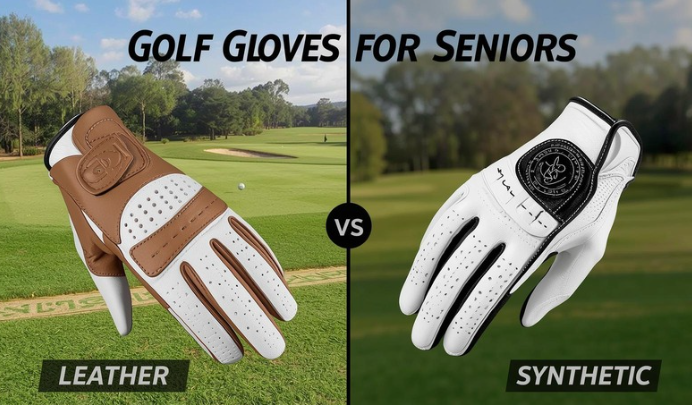
The biggest decision usually comes down to leather versus synthetic. Each has strengths. Each has trade-offs. Neither is universally better. The best choice depends on comfort, control, weather conditions, and how your hands respond during a round.
This guide explores golf gloves for seniors in detail, focusing on how leather and synthetic options affect comfort, grip, durability, and overall performance. By the end, the decision should feel clearer and far less frustrating.
Why Golf Gloves for Seniors Matter More With Age
Hands are sensitive instruments. Over time, they become less tolerant of friction, pressure, and poor fit. What once felt snug may now feel restrictive. What once felt secure may now feel slippery.
Golf gloves for seniors help compensate for these changes. They provide consistent grip without requiring excessive squeeze pressure. As a result, hands stay more relaxed throughout the swing.
Relaxed hands lead to smoother tempo. Smoother tempo leads to better contact. The chain reaction begins with the glove.
Additionally, proper gloves reduce strain on joints. When grip pressure decreases, stress on fingers, wrists, and elbows also drops. Over a full round, that difference becomes noticeable.
Comfort also affects confidence. When you trust your grip, you commit more fully to each shot. That mental clarity improves enjoyment just as much as performance.
Understanding Leather Golf Gloves for Seniors
Leather has long been considered the gold standard. Traditionalists love it for a reason.
Leather golf gloves for seniors offer a soft, natural feel that molds to the hand. Over time, the glove adapts to your grip, creating a personalized fit. That connection enhances feedback from the clubface.
Cabretta leather, commonly used in premium gloves, feels supple and smooth. It allows subtle sensations to pass through, which many golfers associate with better control.
However, leather also has limitations. It absorbs moisture more readily than synthetic materials. In hot or humid conditions, it can stretch or lose shape. Seniors with sweaty hands may notice reduced grip as a round progresses.
Durability can also be a concern. Leather gloves tend to wear faster, especially if used frequently. Fingertips and palms often thin out first.
Despite these drawbacks, many seniors still prefer leather for its comfort and traditional feel. When conditions are mild, leather remains hard to beat.
Comfort Benefits of Leather Golf Gloves for Seniors
Comfort is where leather shines brightest.
The softness of leather reduces friction against the skin. This matters for seniors with sensitive hands or thinning skin. Blisters and hot spots become less likely.
Leather also conforms naturally to finger shape. That adaptability reduces pressure points, especially around knuckles affected by arthritis.
Because leather stretches slightly, it accommodates small changes in hand size during play. Hands swell subtly as circulation increases. Leather adjusts without feeling tight.
That said, fit remains critical. A leather glove that starts too tight may stretch unevenly. One that starts too loose may lose structure quickly.
When properly fitted, leather golf gloves for seniors feel like an extension of the hand rather than a layer over it.
Grip and Control With Leather Gloves
Grip with leather gloves feels natural and responsive. The tackiness is subtle rather than aggressive.
This subtle grip encourages lighter pressure. Seniors benefit from this because squeezing less reduces joint strain. The club feels secure without force.
In dry conditions, leather performs beautifully. Feedback remains consistent. Control during short shots and putting feels precise.
However, moisture changes the equation. Sweat or rain reduces friction. Leather becomes slick if not maintained properly.
Some leather gloves include moisture-resistant treatments. These help but do not fully eliminate the issue. Seniors who play early mornings or humid climates may notice variability.
Still, many golfers accept this trade-off for the unmatched feel leather provides.
Synthetic Golf Gloves for Seniors Explained
Synthetic gloves emerged to solve leather’s weaknesses. Over time, they have evolved significantly.
Synthetic golf gloves for seniors use engineered materials designed to resist moisture, maintain shape, and increase durability. These gloves often feel firmer initially but remain consistent throughout the round.
Many synthetic gloves incorporate mesh panels or stretch zones. These improve airflow and flexibility. Seniors with warm hands often appreciate this ventilation.
Unlike leather, synthetic materials do not stretch as much. As a result, fit remains stable longer. This consistency appeals to golfers who dislike changing glove feel mid-round.
Synthetic gloves also tend to last longer. Abrasion resistance is higher, especially in high-wear areas like the palm.
While the feel may be less natural than leather, modern synthetics have narrowed that gap considerably.
Comfort Considerations With Synthetic Golf Gloves for Seniors
Comfort with synthetic gloves depends heavily on design quality.
Well-made synthetic golf gloves for seniors include soft inner linings and flexible panels. These features reduce stiffness and improve hand movement.
Breathability is a major advantage. Mesh inserts allow heat to escape. Hands stay cooler and drier, which improves comfort over long rounds.
Synthetic gloves also perform well for seniors with grip strength issues. Enhanced tackiness compensates for reduced hand pressure. The club feels secure even with a relaxed grip.
However, some synthetics feel thicker than leather. Seniors who value maximum feel may notice reduced feedback. This difference is subtle but important for touch-oriented players.
Choosing the right synthetic glove often involves balancing grip enhancement with tactile sensitivity.
Grip Performance of Synthetic Gloves
Grip is where synthetic gloves often outperform leather.
Textured palms and specialized coatings increase friction. This remains consistent in humid or wet conditions. Seniors who play in varying weather appreciate this reliability.
Because grip remains high, hand fatigue decreases. Less squeezing means less tension. Over time, that reduces discomfort.
Synthetic gloves also dry faster. Sweat evaporates quickly, maintaining grip integrity. Leather, by comparison, may feel soggy.
For seniors concerned about slipping clubs, synthetic golf gloves provide reassurance. Confidence improves knowing grip will not fade mid-round.
That said, aggressive grip textures may feel intrusive to some golfers. Those who prefer subtlety may still lean toward leather.
Durability and Longevity for Senior Golfers
Durability matters, especially for frequent players.
Leather gloves wear faster. Palms thin. Seams loosen. While this breakdown often improves feel initially, it shortens lifespan.
Synthetic golf gloves for seniors typically last longer. Reinforced panels resist abrasion. Stitching holds shape through repeated use.
For seniors on a budget or those who dislike frequent replacements, synthetic gloves offer better value.
However, durability should not override comfort entirely. A glove that lasts long but feels uncomfortable will not see much use.
Ideally, seniors balance durability with feel based on playing frequency and conditions.
Fit and Sizing Challenges for Seniors
Fit affects both comfort and control.
Hands change shape with age. Fingers may become stiffer. Knuckles may enlarge slightly. Standard sizing does not always account for this.
Golf gloves for seniors should fit snugly without constriction. Excess material reduces feel. Tightness restricts circulation.
Leather gloves stretch slightly, accommodating minor sizing issues. Synthetic gloves require more precise sizing because they stretch less.
Adjustable closures help fine-tune fit. Velcro straps allow small adjustments throughout the round.
Trying gloves later in the day often yields better results. Hands swell naturally, revealing true size.
A properly fitted glove reduces pressure points and enhances control regardless of material.
Weather and Playing Conditions Matter
Conditions influence glove choice more than many golfers realize.
In dry, mild weather, leather excels. Comfort and feel are unmatched. Seniors who play in such climates often prefer leather.
In humid or wet conditions, synthetic gloves shine. Moisture resistance preserves grip. Comfort remains consistent.
Cold weather introduces another factor. Some synthetic gloves include thermal properties. Leather stiffens when cold unless treated.
Many seniors keep both options available. Switching based on conditions maximizes comfort and performance.
Flexibility in glove choice reflects experience, not indecision.
Arthritis and Hand Sensitivity Considerations
Arthritis affects grip strength and joint comfort.
Golf gloves for seniors with arthritis should reduce the need for squeezing. Synthetic gloves with enhanced grip textures help significantly.
Soft leather gloves also reduce friction against sensitive skin. For some, this comfort outweighs grip concerns.
Padded palms provide additional shock absorption. This reduces vibration transfer during impact.
Stretch zones around knuckles improve flexibility. Seniors with limited finger mobility benefit greatly from this design.
Choosing gloves with arthritis in mind prioritizes comfort over tradition.
Cost vs Value for Senior Golfers
Price varies widely.
Leather gloves often cost more and need replacement sooner. Synthetic gloves cost less and last longer.
Value depends on how often you play. Occasional golfers may prefer leather for feel. Frequent players may favor synthetic for durability.
Some seniors rotate gloves. Leather for competition rounds. Synthetic for practice.
This hybrid approach balances cost, comfort, and performance effectively.
Making the Right Choice: Leather or Synthetic
There is no universal answer.
Golf gloves for seniors should match personal needs. Hand sensitivity, grip strength, weather, and playing frequency all matter.
Leather offers unmatched feel and comfort. Synthetic offers consistency and durability.
Listening to your hands provides the best guidance. Discomfort signals the wrong choice. Confidence signals the right one.
Trying both materials often reveals preferences quickly.
Conclusion
Golf gloves for seniors play a vital role in comfort, control, and confidence on the course. Leather gloves deliver exceptional feel and softness, while synthetic gloves provide reliable grip and durability in varied conditions. By understanding the strengths and limitations of each material, seniors can choose gloves that support relaxed hands, steady swings, and greater enjoyment. The right glove does not demand attention. It simply allows the game to feel easier again.
FAQ
1. Are leather golf gloves better for seniors?
Leather offers superior feel and comfort, especially for sensitive hands, but may struggle in wet conditions.
2. Do synthetic gloves help seniors with grip strength?
Yes, synthetic gloves provide enhanced grip, reducing the need to squeeze the club tightly.
3. How often should seniors replace golf gloves?
Replace gloves when grip fades or material thins, typically every 15 to 25 rounds depending on use.
4. Can seniors switch between leather and synthetic gloves?
Yes, many golfers rotate gloves based on weather and playing conditions.
5. What fit should golf gloves for seniors have?
They should fit snugly without restricting circulation, allowing natural finger movement.