
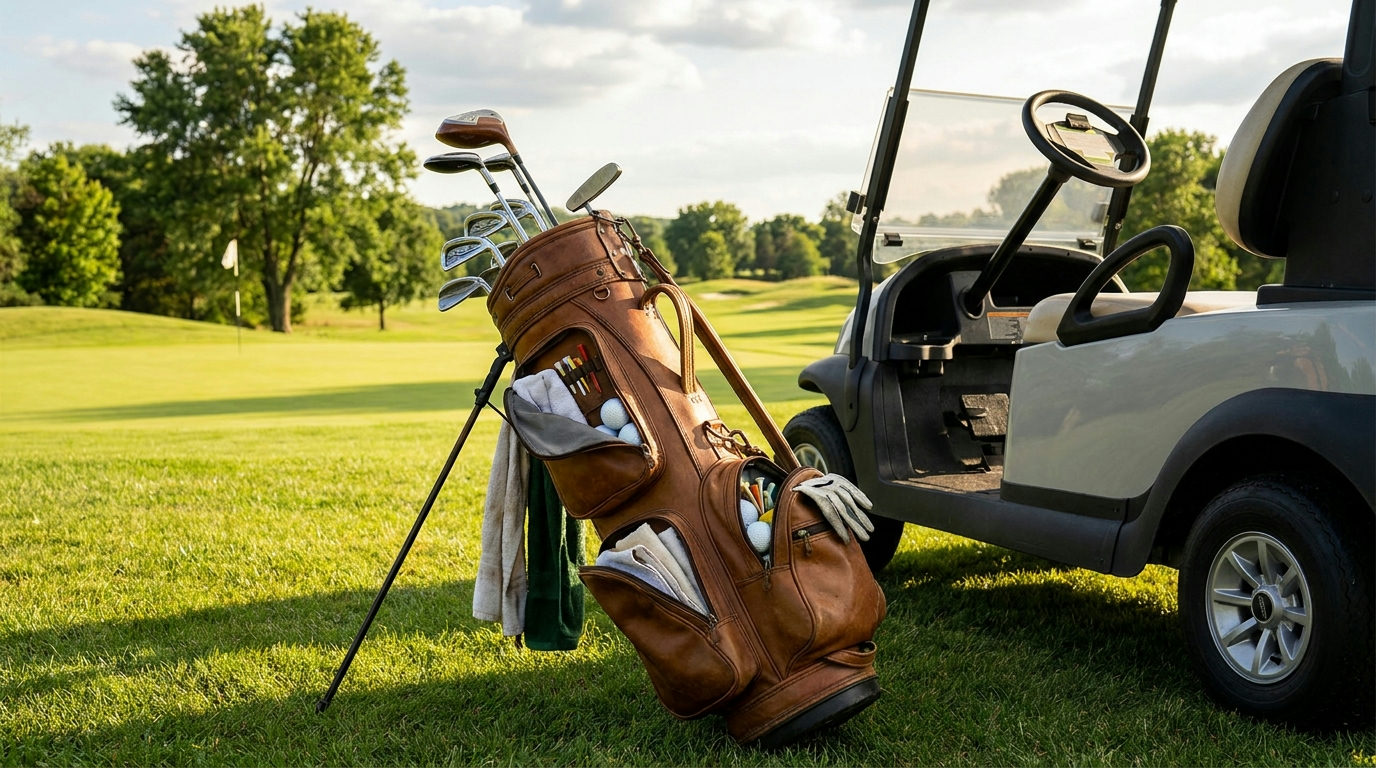
A well-packed golf bag makes a round go more smoothly. Knowing what to carry means you are ready for whatever the course throws at you — a wet morning, an unexpected ruling, or a ball that lands in an awkward spot. This guide covers the golf bag essentials that senior golfers find genuinely useful on the course, separated from the extras that end up weighing you down.
Golf Balls: Carry More Than You Think You Need
Running out of golf balls mid-round is one of the more avoidable frustrations in golf. A practical starting point is carrying enough for every hole you plan to play, with a few extra. The number that feels right varies by golfer, but more is rarely a problem. Keep several in an easy-access pocket so you are not rummaging in the bag on the tee.
Choosing balls suited to your current game is worth a moment’s thought. For senior golfers with slower swing speeds, lower-compression balls tend to feel better and can travel further for a given strike. See our guide to the best golf balls for senior golfers for a breakdown of options by swing speed and feel.
Golf Tees: More Useful Than Just for the Tee Box
Carry a generous supply of tees. They break, they get left in the ground, and they disappear faster than seems physically possible. Beyond teeing up the ball, tees are used for marking ball positions when a coin is not handy, as alignment aids during practice swings, and for repairing pitch marks in a pinch (though a proper pitch mark repair tool is more effective). A small stock in an accessible pocket means you never have to ask a playing partner for one.
Ball Markers: For the Green
Under the Rules of Golf, when you lift your ball on the putting green, you must place a small marker to indicate where it was before picking it up. A flat coin is the most common choice. Purpose-made ball markers are available in many styles and some attach to a hat clip or a divot tool for easy access. Whichever you prefer, having one in your pocket or bag every round saves the small awkwardness of asking a playing partner for a coin mid-green.
Pitch Mark Repair Tool
A pitch mark repair tool (sometimes called a divot tool or green fork) is used to repair the small indentation left when a ball lands on the putting green. Under golf etiquette — and in many clubs’ local rules — repairing your own pitch mark, and any unrepaired ones you find nearby, is expected before you putt and helps keep the greens in good condition for everyone who follows.
Combination tools that incorporate a ball marker and a pitch mark repair tool are widely available and compact enough to keep in a shirt pocket throughout the round.
A Scorecard Pencil
Most courses provide a pencil with the scorecard, but they are easily lost or broken. A backup pencil in the bag is a small thing that avoids a disproportionate irritation. Some golfers prefer a short pencil attached to the inside of the bag’s scorecard pocket; others carry a spare in a zip pocket.
A Golf Glove (and a Spare)
A glove improves grip in dry conditions and is a staple for most golfers. In wet weather a glove can reduce grip in some conditions, and some golfers prefer no glove in the rain. A spare glove in the bag — in its own small bag or wrap to keep it fresh — is useful if the primary glove gets soaked or tears. Gloves wear over time and lose their grip; replacing them more regularly than feels strictly necessary is one of the small equipment habits that makes a consistent difference over the course of a season.
Water and a Light Snack
Staying hydrated during a round helps you stay focused and comfortable across 18 holes. Most courses have water points on the course, but carrying a small bottle gives you a guaranteed source between stations. A light snack such as a cereal bar or a banana helps maintain energy through the back nine. Nothing about this is specific to senior golfers — but it tends to matter more as the round goes on than it does at the first tee.
Sun Protection
Golf is typically played over several hours in outdoor conditions. Sunscreen and a hat are standard outdoor essentials. A cap with a brim helps with both sun protection and visibility when tracking the ball flight. Some golfers also carry a small lip balm with SPF. These are not golf-specific items, but they belong in the bag on any sunny day.
Rain Gear
Many senior golfers play through light rain that would have had them off the course in earlier years. A compact waterproof jacket and rain gloves take up little space in the bag and transform a damp round into a manageable one. A waterproof bag cover protects your clubs and keeps grips dry; some bags include one built in. An umbrella is useful but adds bulk — personal preference and how much you expect to carry it determines whether it is worth packing.
A Towel
A golf towel clipped to the bag handles cleaning clubs after shots from wet or muddy ground, wiping grips when conditions are damp, and cleaning the ball after marking it on the green. A wet side and a dry side — divided by folding — is a habit many golfers develop early and stick with. A second small towel for the bag pocket gives you a dry option when the main towel is saturated on a very wet day.
A Rules Reference
The USGA Rules of Golf are available as a compact printed book and as a free app, either of which is easy to carry or access mid-round when a question about a ruling comes up. The Local Rules card provided by the course at the start of the round is worth keeping with the scorecard for the same reason — it covers course-specific conditions such as preferred lies, ground under repair, and out-of-bounds areas that may differ from the standard rules.
What Not to Carry
A bag that is too heavy becomes a problem over 18 holes, particularly for golfers who carry rather than use a cart. The most common unnecessary weight comes from accumulated extras: broken tees, old scorecards, rain jackets that don’t fold back in properly, and more balls than anyone needs. A quick audit of the bag at the start of each season removes what has accumulated and makes the bag easier to manage through the round.
The 14-club limit under the Rules of Golf applies in competitions — carrying more than 14 clubs is a penalty — so checking your club count before a competition round is worth making a habit.
Summary
The essential items — enough golf balls, tees, a ball marker, a pitch mark repair tool, a pencil, a glove, water, sun protection, and rain gear — are the foundation. Everything else is personal preference. The right bag is one that has what you need for the round without weighing more than it has to. Getting into a consistent packing habit before the season means you never arrive at the first tee missing something obvious.
For more on preparing for a round, see our guide to golf tee colors to make sure you are teeing off from the right set of markers from the start.
Disclosure: Senior Golf Life may earn a commission from qualifying purchases through affiliate links on this site, at no additional cost to you.