
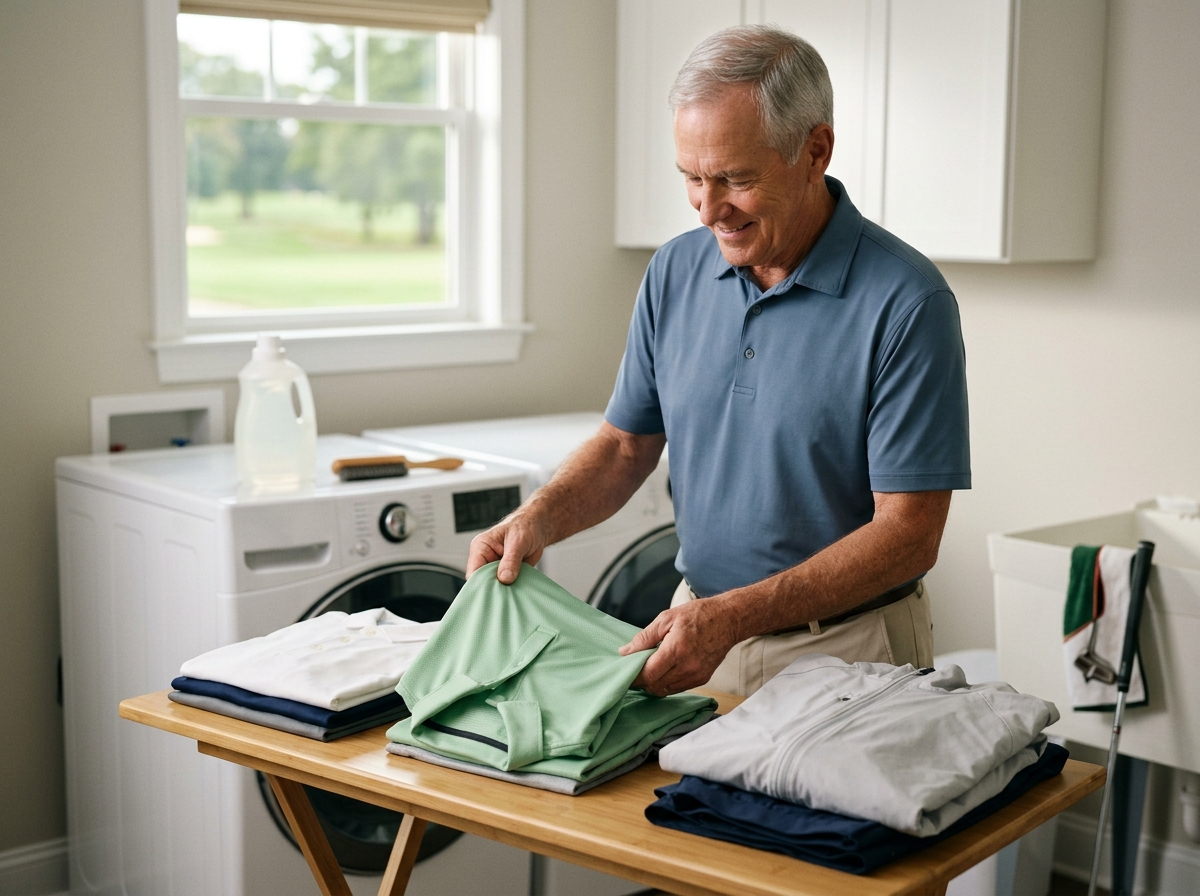
Wash golf apparel with care, and it can stay comfortable, fresh, and ready for many more rounds. Senior golfers often choose clothing for comfort, easy movement, sun protection, breathability, and moisture control, so proper care matters more than many players realize. A favorite polo, stretch pant, skort, pullover, rain jacket, or lightweight vest can lose its feel if it is washed too harshly or dried with too much heat. Because golf clothing often uses performance fabrics, it needs a gentler approach than everyday cotton shirts or towels. When seniors care for these pieces correctly, they protect both the fabric and the way it performs on the course.
Golf apparel has to handle more than style. It deals with sweat, sunscreen, grass, dirt, humidity, cart seats, rain, and repeated movement through the swing. Over time, these factors can affect stretch, color, texture, and odor control. However, good laundry habits can slow that wear. The right routine can help collars keep their shape, waistbands stay comfortable, and technical fabrics continue to wick moisture during warm rounds.
For senior golfers, clothing comfort can affect the whole round. A shirt that clings, a stiff waistband, or a jacket that no longer repels light moisture can become distracting. Therefore, garment care is not just about keeping clothes clean. It also helps preserve the comfort, fit, and confidence that make golf more enjoyable.
Many golfers spend carefully on quality apparel but then wash everything the same way. That can shorten the life of good gear. A simple care routine can protect your investment without adding much work. Once you understand fabric labels, water temperature, detergent choice, drying methods, and storage, maintaining golf apparel becomes easy.
Read the Care Label Before Every Wash
The care label is the best starting point because golf apparel can include many different fabrics. Some shirts use polyester blends, while others include elastane, nylon, cotton, merino wool, or water-resistant finishes. Each material reacts differently to heat, detergent, and drying. Because of that, seniors should avoid guessing.
Before washing a new piece, check the label for water temperature, drying instructions, ironing limits, and special warnings. Some performance shirts need cold water. Rain gear may require gentle washing and air drying. Wool blends may need extra care. If the label says to avoid fabric softener, follow that instruction because softener can coat technical fibers.
It also helps to sort golf clothes by fabric type and color. Wash light colors together and keep dark colors separate. This protects white polos and light shorts from dulling. In addition, separate delicate performance pieces from heavy towels, denim, or rough items. Heavy fabrics can rub against golf apparel and cause pilling or surface wear.
When you wash golf apparel, close zippers, fasten buttons, and turn pieces inside out. This protects the outer surface from friction. It also helps preserve logos, prints, and color. For shirts with collars, smoothing the collar before washing can help it hold shape better.
Senior golfers who play often may want a small laundry basket just for golf clothing. This keeps sweaty performance gear from sitting too long with heavy household laundry. It also makes the washing routine easier after a round.
Use Cold Water and Gentle Detergent
Cold water is usually the safest choice for most golf apparel. It helps protect stretch fibers, reduce fading, and limit shrinkage. Warm or hot water may seem better for cleaning, but it can damage some performance materials. It may also weaken elastane, which helps clothing move with the body.
A gentle detergent is also important. Choose a mild liquid detergent that rinses clean. Avoid using too much because extra detergent can build up in fabric. That buildup may trap odor, reduce breathability, and make clothing feel less comfortable. A small amount is often enough, especially for lightly worn golf clothes.
Seniors should be careful with bleach. Chlorine bleach can weaken fibers and damage color. Even white golf shirts may contain performance blends that do not respond well to harsh products. If a shirt needs brightening, use a safer oxygen-based option only if the label allows it.
Fabric softener is another common mistake. It may make towels feel fluffy, but it can reduce the performance of golf clothing. Softener can coat moisture-wicking fibers, which makes shirts less effective at moving sweat away from the skin. Therefore, skip it for polos, base layers, stretch pants, and athletic-style pieces.
When you wash golf apparel after a hot round, do not let sweaty clothes sit in a closed bag for days. Moisture and odor can settle into the fabric. If you cannot wash right away, hang items to air out first. This simple habit helps prevent stubborn smells.
Remove Sweat, Sunscreen, and Course Stains
Golf clothing often picks up stains that are not obvious at first. Sunscreen can leave yellow marks around collars and sleeves. Sweat can build up under the arms. Grass and soil may show on cuffs, hems, or knees. Treating these areas before washing can help clothes last longer.
Start by checking common stain zones. Look at collars, cuffs, underarms, waistbands, and pockets. Apply a small amount of gentle detergent to the stained area and let it sit for a few minutes. Then wash as usual. Avoid scrubbing too hard because that can damage fabric texture.
For sunscreen stains, quick action helps. Sunscreen oils can cling to fabric, especially on light shirts. Rinse the area with cool water, then use mild detergent before washing. If the stain remains, avoid heat drying because heat can set the mark. Air dry first and treat again if needed.
Grass stains need patience. A soft brush can help loosen dirt, but aggressive scrubbing may cause pilling. Use a gentle stain remover if the care label allows it. Seniors who often play morning rounds may notice more grass and moisture marks, so checking clothing after each round is useful.
When you wash golf apparel with stain treatment, keep the process simple. Harsh chemicals can damage stretch and color. A mild product, cold water, and patience usually work better than force. Over time, this protects both appearance and performance.
Odor can also become a problem in performance fabrics. If a shirt still smells after washing, try soaking it briefly in cool water with a sport-safe detergent. Then rinse well. Avoid masking odor with heavy fragrance because that does not solve buildup.
Dry Golf Clothing the Right Way
Drying is where many golf clothes get damaged. High heat can shrink fabric, weaken stretch fibers, fade colors, and affect water-resistant finishes. For most performance apparel, air drying is the best option. It is gentler and helps clothing keep its shape.
After washing, shake each item gently and smooth it with your hands. Hang shirts on wide or shaped hangers, or lay delicate items flat. Avoid thin wire hangers that can stretch shoulders. Pants and shorts can be hung from the waistband or laid flat to dry.
If you use a dryer, choose low heat or air-dry settings only if the label allows it. Remove clothing while it is still slightly damp to reduce wrinkles. Then let it finish drying naturally. This works well for some polos and casual golf shorts, but it may not be right for rain gear or delicate layers.
Never dry waterproof or water-resistant golf apparel on high heat unless the care label specifically says it is safe. Some technical outerwear needs special care to maintain its finish. A jacket that once handled drizzle may lose performance if treated like a regular sweatshirt.
When you wash golf apparel regularly, drying habits make a big difference. Air drying may take longer, but it helps preserve fit and comfort. For seniors who invest in quality golf clothing, this small extra step can extend the life of each piece.
Storage after drying matters too. Make sure clothes are fully dry before putting them away. Damp storage can lead to odor or mildew, especially in humid climates.
Maintain Stretch, Shape, and Comfort
Stretch is one of the most important features in modern golf clothing. Shirts, pants, shorts, and layers need to move through the swing without pulling. However, stretch fibers can wear out if they face heat, harsh washing, or rough handling. Protecting them helps apparel stay comfortable.
Avoid wringing out wet golf clothes. Twisting fabric can strain fibers and affect shape. Instead, press out extra water gently with a towel. This is especially helpful for lightweight pullovers, rain layers, and delicate polos.
Do not overload the washing machine. Clothes need room to move and rinse properly. A packed machine creates more friction, which can lead to pilling and uneven cleaning. Smaller loads are better for golf apparel, especially if the items are technical or expensive.
Senior golfers should also avoid washing golf clothing with Velcro items. Glove straps, rough towels, and certain accessories can snag fabric. If you must wash items with Velcro, close the fasteners and use a laundry bag. This protects polos and stretch layers.
When you wash golf apparel that includes compression or support features, gentle care is even more important. These garments rely on controlled stretch. Too much heat or rough washing may reduce their fit. Follow the label and air dry whenever possible.
Comfort also depends on softness. If clothing starts to feel stiff, detergent buildup may be the cause. Use less detergent and add an extra rinse cycle if needed. Clean fabric should feel fresh, not coated.
Care for Rain Gear, Jackets, and Layers
Golf outerwear needs special care because it often includes coatings, membranes, or water-resistant finishes. These pieces protect seniors during wind, drizzle, and cooler rounds, so keeping them functional is important. A jacket that loses breathability or water resistance may feel clammy or uncomfortable.
Always read the care label on rain gear. Some jackets need technical wash products instead of regular detergent. Others may need air drying or low heat to reactivate a durable water-repellent finish. Since instructions vary, the label should guide your routine.
Avoid fabric softener on rain gear and performance layers. It can interfere with breathability and water resistance. Also avoid heavy fragrance products, which may leave residue. Gentle cleaning keeps technical features working better.
Fleece and pullovers need attention too. Wash them inside out to reduce pilling. Use cold water and avoid high heat. If a pullover has zippers, close them before washing to prevent snagging. For senior golfers who rely on layers during cool morning rounds, this helps keep pieces looking and feeling good.
When you wash golf apparel after wet rounds, dry everything completely before storage. Rain jackets, hats, and outer layers should not stay crumpled in a golf bag. Hang them in a ventilated space until fully dry. This prevents odor and helps materials recover their shape.
Outerwear may not need washing after every round. Sometimes airing it out is enough. Washing only when needed can help preserve technical finishes and extend the life of the garment.
Store Golf Apparel for Longer Life
Good storage helps maintain apparel between rounds. Senior golfers often build a wardrobe of polos, pants, jackets, hats, and layers for different weather. Keeping these items organized makes it easier to choose the right outfit and prevents unnecessary wear.
Fold or hang items based on their fabric. Polos can be folded neatly or hung on supportive hangers. Stretch pants and shorts should be stored without heavy creases. Jackets should be hung with enough space so they are not crushed. This helps preserve shape and performance.
Keep golf clothing away from direct sunlight during storage. Sunlight can fade colors, especially on dark shirts and bright performance fabrics. A cool, dry closet is better than a hot garage or car trunk. Heat can weaken elastic and make fabrics age faster.
Do not store damp clothing in a golf bag. After a round, remove used shirts, socks, gloves, towels, and rain layers. This keeps odor from spreading and protects both apparel and equipment. A fresh, dry golf bag also makes the next round more pleasant.
When you wash golf apparel before storing it for the off-season, make sure every piece is clean and fully dry. Stains left untreated for months can become harder to remove. Clean storage gives clothes a better start when golf season returns.
Seniors who travel for golf should pack clothing loosely when possible. Rolling can save space, but avoid crushing structured collars or jackets. A small garment folder or packing cube can help keep outfits organized.
Final Thoughts on Lasting Apparel Performance
Taking care of golf clothing does not need to be complicated. A few smart habits can help senior golfers protect comfort, color, stretch, and performance. Read the care label, use cold water, choose gentle detergent, skip fabric softener, treat stains early, and avoid high heat. These simple steps can make apparel last longer and feel better.
Golf clothing supports the body through walking, swinging, bending, and changing weather. When it is cared for properly, it stays comfortable and reliable. That matters for seniors because small discomforts can affect focus and enjoyment during a round.
The best routine is also easy to repeat. Wash golf apparel soon after play, dry it gently, and store it in a clean, dry space. Over time, these habits protect your investment and reduce the need to replace favorite pieces too quickly.
Quality golf apparel can help seniors feel confident on the course. However, even the best shirt or jacket needs proper care. With the right laundry routine, your clothing can continue to move well, breathe well, and look polished through many rounds.
When you wash golf apparel the right way, you keep every piece ready for the next tee time. That means less fading, less odor, better comfort, and more lasting performance from the golf wardrobe you already trust.
FAQ
1. Should Senior Golfers Wash Golf Clothes After Every Round?
Most shirts, socks, and base layers should be washed after every round. Jackets and outer layers may only need airing out unless they are sweaty, dirty, or wet.
2. What Water Temperature Is Best for Golf Apparel?
Cold water is usually best because it protects color, stretch, and performance fabrics. Always check the care label before washing.
3. Can I Use Fabric Softener on Golf Shirts?
It is better to avoid fabric softener on performance golf shirts. It can coat moisture-wicking fibers and reduce breathability.
4. How Should I Dry Golf Clothes?
Air drying is usually the safest method. If you use a dryer, choose low heat only when the care label allows it.
5. How Can I Keep Golf Apparel From Smelling Bad?
Air out sweaty clothes quickly, wash them with mild detergent, and avoid using too much detergent. For stubborn odor, try a sport-safe detergent and rinse well.