
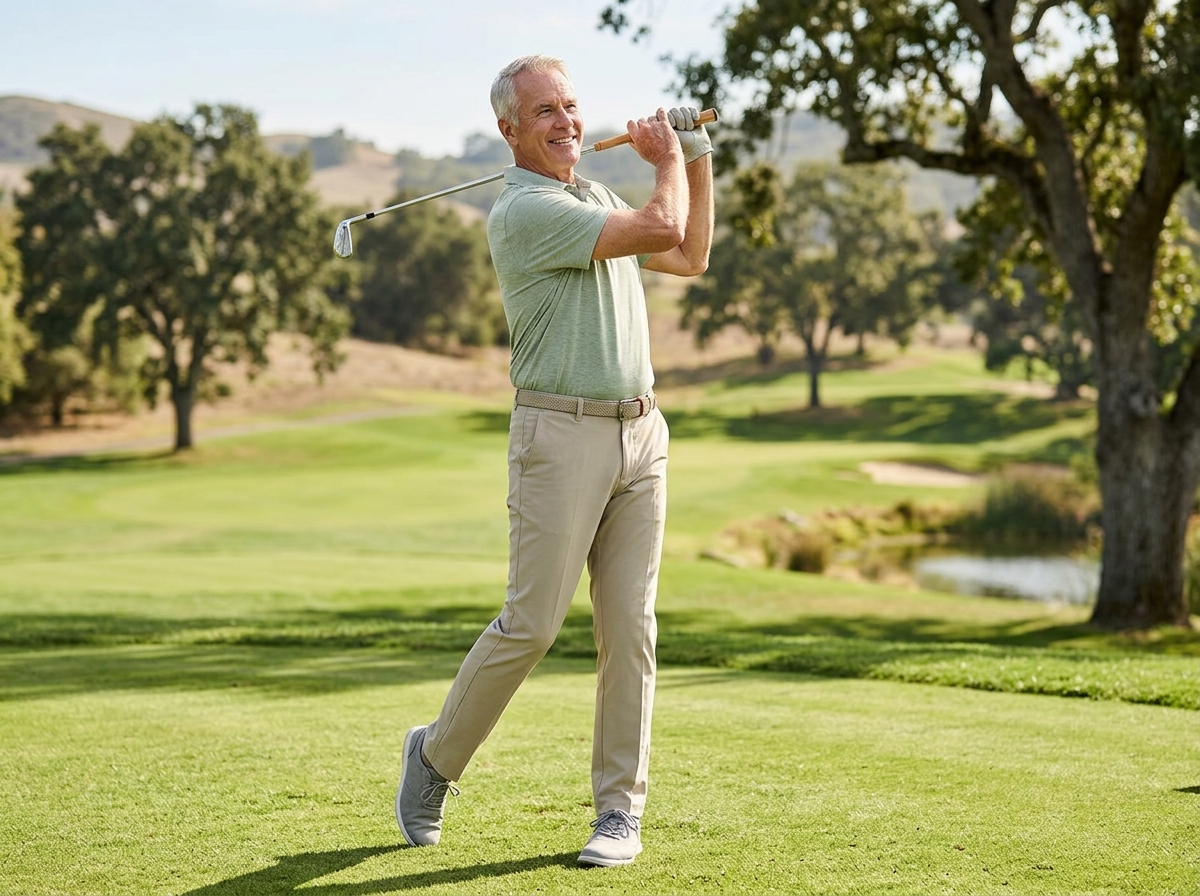
Eco-friendly golf apparel is becoming a smart choice for senior golfers who want comfort, style, and better buying habits without giving up performance on the course. As golf clothing continues to evolve, more brands are using recycled fabrics, lower-impact materials, and thoughtful production choices to create shirts, pants, shorts, skorts, pullovers, and jackets that feel good during play. For seniors, the best sustainable golf clothing should do more than look modern. It should feel soft against the skin, move easily through the swing, manage moisture, protect against sun exposure, and stay comfortable through a full round.
Golf apparel has always needed to balance style and function. However, today’s senior golfers often want more from their wardrobe. They want breathable polos that do not cling, stretch pants that do not restrict rotation, lightweight layers that do not feel bulky, and fabrics that perform well in warm, cool, or damp conditions. Because of that, sustainable golf clothing works best when it supports real playing needs first. The environmental benefit is important, yet comfort still decides whether a golfer actually wears the piece.
Modern sustainable golf brands now understand this balance better. Some use recycled polyester made from plastic bottles, while others explore organic cotton, responsibly sourced wool, plant-based fibers, or longer-lasting blends. Callaway’s Eco collection, for example, includes golf clothing made with fabric from recycled water bottles, showing how mainstream golf brands are adding sustainability into performance apparel lines.
For senior players, the appeal is practical. Eco-friendly golf apparel can feel lighter, softer, and easier to layer when chosen well. It can also help golfers build a smaller, better wardrobe instead of buying too many pieces that wear out quickly. Therefore, the goal is not only to shop greener. It is to choose golf clothes that support comfort, confidence, and smart long-term value.
Why Sustainable Comfort Matters for Senior Golfers
Comfort becomes more important with age because small clothing problems can affect the whole round. A collar that rubs, a waistband that digs, or a sleeve that limits shoulder turn can quickly become distracting. Senior golfers may also deal with changing mobility, sensitive skin, temperature changes, or longer recovery after physical strain. Because of that, apparel should feel easy from the first swing.
Eco-friendly golf apparel can help when brands focus on soft materials and thoughtful construction. A good senior-friendly polo should breathe well, wick moisture, and allow the arms and torso to rotate freely. Pants and shorts should stretch without sagging. Mid-layers should provide warmth without blocking the swing. These details matter because golf requires repeated movement, not just standing and walking.
Sustainable comfort also includes temperature control. Many seniors prefer clothing that keeps them cool in warm weather and comfortable when the breeze picks up. Lightweight recycled performance fabrics can help manage sweat, while breathable natural blends may feel softer for casual rounds. In cooler weather, recycled fleece, insulated vests, and stretch pullovers can provide warmth without adding too much weight.
The right fit also supports confidence. Many senior golfers prefer clothing that looks polished but does not feel tight. Relaxed athletic cuts, slightly longer shirt lengths, flexible waistbands, and soft seams can all improve comfort. When clothes fit well, golfers move more naturally and feel less self-conscious during the round.
Sustainability also encourages smarter shopping. Instead of buying several cheap shirts each season, seniors can invest in fewer pieces that last longer. This creates less waste and often saves money over time. A well-made polo that keeps its shape after many washes is more useful than a bargain shirt that fades quickly.
What Makes Golf Apparel Truly Eco-Friendly
Not every garment with a green label is automatically sustainable. True eco-friendly golf apparel should combine better materials, responsible production, useful performance, and long wear life. If a shirt uses recycled fabric but falls apart quickly, it is not a great sustainable choice. Durability matters because the most responsible piece is often the one you can wear for many seasons.
Materials are the first thing to check. Recycled polyester is common in performance golf clothing because it can offer stretch, moisture control, and durability. Some brands use recycled nylon, organic cotton, bamboo blends, or responsibly sourced wool. Each fabric has strengths. Recycled synthetics usually perform well during active play, while natural fibers may feel softer and more breathable for relaxed rounds.
However, senior golfers should also think about care. Clothes that wash easily, dry quickly, and resist wrinkles are more practical. If a sustainable shirt needs complicated care, it may not become a regular part of the wardrobe. Easy-care clothing helps golfers keep their apparel looking good with less effort.
Production practices also matter. Some brands focus on ethical labor, reduced water use, safer dyes, or smaller production runs. Others use recycled packaging or repair programs. While these details may not affect swing comfort directly, they show whether the brand is serious about sustainability beyond marketing.
Eco-friendly golf apparel should also avoid unnecessary bulk. Seniors often appreciate clothing that packs well for travel, dries quickly after washing, and layers cleanly. A light jacket that works for golf trips, daily walks, and casual outings creates more value than a single-use item. Versatility is part of sustainability because it reduces the need for extra purchases.
Certifications can help, but they are not the only measure. Look for clear explanations of materials and sourcing. A trustworthy brand should explain what makes the product lower impact. Vague claims like “green” or “natural” are less helpful than specific details about recycled content, organic fibers, or responsible manufacturing.
Brands and Features Worth Watching
More golf brands now offer sustainable apparel, but senior golfers should focus on features rather than labels alone. Golf Monthly’s recent women’s golf clothing coverage highlights how modern golf apparel now combines breathability, stretch, weather protection, and on-course style across shirts, skorts, pants, layers, and jackets. It also notes that golfers should consider fit, mobility, breathability, and weather resistance when choosing apparel.
Some established golf brands have added eco-focused lines, while smaller companies build sustainability into their entire identity. Callaway, PGA TOUR, and Original Penguin are among brands sold through sustainable golf apparel collections that use fabric made from recycled water bottles. Meanwhile, sustainability-focused golf brand guides often mention companies such as Radmor and Glenmuir for their efforts around materials, sourcing, and lower-impact golf clothing.
For seniors, the best brand choice depends on fit and use. A golfer who plays in hot weather may want lightweight polos with moisture control. Someone who walks often may prefer stretch shorts or pants with a soft waistband. A player who travels for golf may need wrinkle-resistant layers that pack easily. Therefore, the most sustainable brand is not always the trendiest one. It is the one that makes clothing you will actually wear often.
Eco-friendly golf apparel should also fit your personal style. Some brands offer classic colors, clean collars, and traditional golf silhouettes. Others lean into modern prints, athletic cuts, or casual lifestyle designs. Senior golfers do not need to choose between age-appropriate comfort and fresh style. A simple recycled polo, a stretch trouser, and a breathable vest can look sharp without feeling flashy.
When comparing brands, read product descriptions carefully. Look for exact fabric details, stretch features, care instructions, and fit notes. Also check whether the garment is designed for golf movement. General sustainable activewear may work for practice or casual rounds, but golf-specific apparel often handles rotation, posture, and dress codes better.
How Seniors Can Build a Sustainable Golf Wardrobe
A practical golf wardrobe starts with the pieces you wear most. For many senior golfers, that means polos, bottoms, light layers, weather protection, and comfortable accessories. Instead of replacing everything at once, start with one or two high-use items. This helps you test fit, feel, and durability before buying more.
A soft performance polo is a good first choice. Look for breathable fabric, comfortable sleeve length, and enough stretch through the shoulders. If you play in strong sun, consider shirts with UPF protection. A polo that works in both casual and club settings gives you more value.
Next, choose bottoms that move well. Stretch pants, pull-on shorts, or skorts with flexible waistbands can make a round more comfortable. Seniors should avoid stiff fabrics that restrict bending or walking. A clean fit matters, but comfort should guide the purchase.
Layering pieces are also useful. A lightweight vest can add warmth without limiting the arms. A quarter-zip can work on cool mornings and breezy afternoons. A water-resistant jacket can help during light rain or windy rounds. When these pieces use recycled or responsibly sourced materials, they support both comfort and sustainability.
Eco-friendly golf apparel works best when the wardrobe stays simple. Choose colors that mix easily, such as navy, white, gray, khaki, black, soft green, or light blue. This makes it easier to create outfits without owning too many items. A smaller wardrobe with better pieces often feels more organized and more useful.
Seniors who travel for golf should also consider packability. Lightweight shirts, wrinkle-resistant trousers, and versatile outerwear can reduce luggage space. If one jacket works for the course, clubhouse, and evening walk, it earns its place in the bag. This approach supports sustainable buying because each item serves more than one purpose.
Fit, Fabric, and Feel on the Course
The best sustainable golf clothing should feel comfortable during real play. A shirt may look good online, but the real test happens during a full swing, a long walk, and a warm afternoon. Therefore, seniors should pay close attention to fit and movement.
Shoulder comfort is especially important. Golf requires rotation, extension, and follow-through. If a shirt pulls across the upper back, the golfer may shorten the swing without realizing it. Stretch fabric helps, but cut also matters. A slightly relaxed fit can feel better than a tight athletic fit.
Waist comfort is another key detail. Many senior golfers prefer waistbands with gentle stretch. This helps during walking, bending, and sitting in a cart. Pants and shorts should stay secure without squeezing. If the waistband feels uncomfortable at home, it will likely feel worse after several holes.
Fabric texture also matters. Some recycled fabrics feel smooth and light, while others may feel slick or warm. Natural blends can feel soft, but they may not wick moisture as well as performance synthetics. The right choice depends on climate, skin sensitivity, and personal preference.
Eco-friendly golf apparel should also support easy movement in changing weather. In humid conditions, breathable fabrics can reduce discomfort. In cooler weather, soft layers can help keep muscles warm. Seniors may feel temperature changes more during a round, so flexible layering is important.
Do not ignore seams and labels. Rough stitching, stiff collars, or scratchy tags can become annoying. Look for smooth finishes and thoughtful design. These details often separate high-quality apparel from clothing that only looks good at first glance.
Balancing Style, Value, and Long-Term Use
Sustainable clothing sometimes costs more upfront. However, value depends on how often you wear the item and how long it lasts. A durable polo that stays comfortable for several seasons can be a better buy than three cheaper shirts that lose shape quickly.
Style also affects value. If a garment looks too trendy, you may stop wearing it after one season. Classic designs usually last longer in a senior golf wardrobe. Clean colors, simple patterns, and comfortable cuts make outfits easier to repeat. This supports sustainability because you buy less over time.
Eco-friendly golf apparel can also help seniors feel more intentional about their purchases. Instead of buying because something is on sale, consider whether it fills a real need. Ask whether it matches pieces you already own. Also think about whether it works beyond golf. A shirt that looks good for lunch after the round has more use than one that only works on the course.
Care habits affect longevity too. Wash golf clothing in cold water when possible, avoid harsh drying, and follow label instructions. Gentle care can help fabrics keep their shape and performance. It can also reduce energy use, which supports the overall goal of sustainable dressing.
A smart wardrobe does not need to be perfect. You do not have to replace every older item immediately. In fact, wearing what you already own is often the most sustainable choice. Then, when something wears out, replace it with a better option.
Over time, this approach creates a wardrobe that feels lighter, more useful, and more comfortable. It also lets senior golfers support better apparel choices without making shopping complicated.
Final Thoughts on Sustainable Golf Comfort
Eco-friendly golf apparel gives senior golfers a practical way to combine comfort, style, and more mindful shopping. The best pieces are not just better for the planet. They also feel better during play, move more naturally through the swing, and last through many rounds. When seniors choose sustainable clothing carefully, they can build a wardrobe that supports both performance and everyday ease.
The key is to focus on real needs. Breathability, stretch, soft feel, easy care, and weather-ready layering matter more than any label. Sustainable materials are important, but the clothing must still work on the course. A recycled polo that feels great, fits well, and stays in rotation for years offers more value than a trendy piece that sits unused.
Brands are making progress, and golfers now have more choices than ever. From recycled performance polos to comfortable stretch pants and versatile outerwear, sustainable golf clothing can fit many playing styles. Seniors can start small, choose wisely, and build from there.
Golf should feel enjoyable, comfortable, and personal. With the right apparel, senior golfers can move freely, stay cool, look polished, and support smarter buying habits. Eco-friendly golf apparel makes that possible by blending sustainable thinking with the comfort every golfer needs.
FAQ
1. What Makes Golf Clothing Sustainable?
Sustainable golf clothing often uses recycled, organic, or responsibly sourced materials. It may also involve better production practices, lower waste, and longer-lasting construction.
2. Is Recycled Polyester Comfortable for Senior Golfers?
Yes, recycled polyester can be comfortable when the fabric is soft, breathable, and stretchy. It often works well for polos, layers, and performance golf shirts.
3. Should Seniors Choose Natural or Synthetic Golf Fabrics?
It depends on the round and climate. Natural blends may feel softer, while synthetic performance fabrics often manage sweat and stretch better during active play.
4. How Can Older Golfers Shop More Sustainably?
Start by buying fewer, better pieces that fit well and last longer. Also choose versatile colors and styles that work for golf, travel, and casual wear.
5. Are Sustainable Golf Brands More Expensive?
Some are more expensive upfront, but they can offer better long-term value if the clothing lasts longer and gets worn often. Comfort, durability, and fit should guide the choice.