
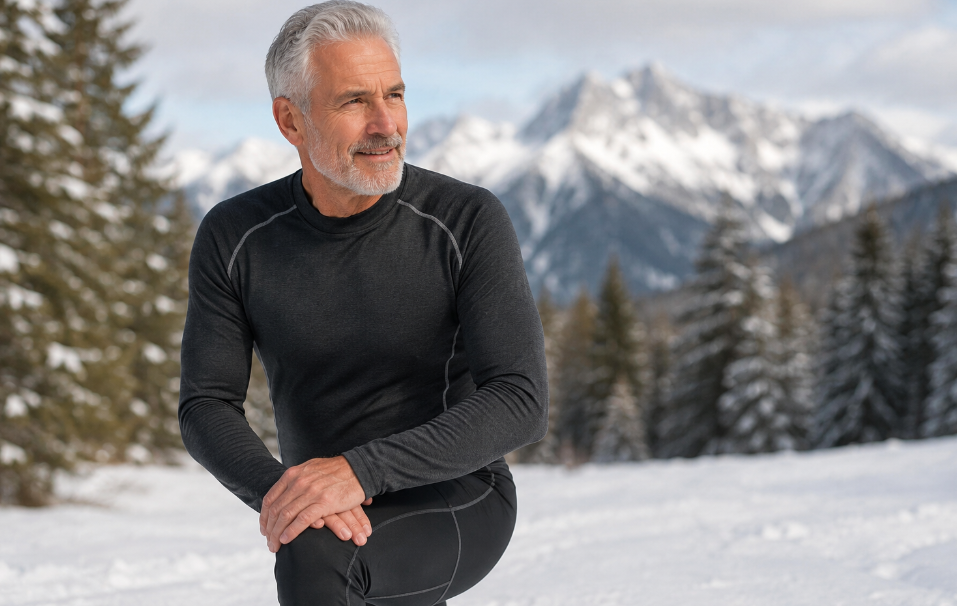
Thermal base layers can make cold weather feel much easier for seniors who want warmth without stiffness, bulk, or discomfort. As temperatures drop, the body often works harder to stay warm, especially during outdoor walks, golf rounds, travel days, errands, or light exercise. However, wearing a heavy coat alone does not always solve the problem. Warmth works best when it starts close to the skin, where the right fabric can hold heat, manage moisture, and support free movement.
Many seniors dress for winter by adding thick sweaters, heavy jackets, and oversized outerwear. While that can help in harsh conditions, too much bulk can limit movement. It may also make the body overheat indoors or feel damp during activity. A smarter approach begins with a comfortable base layer that traps warmth while allowing the body to move naturally. Because of that, thermal clothing can support both comfort and confidence in colder months.
The best cold-weather outfit is not just about staying warm. It should also help seniors move safely and easily. When clothing feels tight, heavy, or restrictive, simple activities can feel harder. Therefore, choosing the right first layer can improve daily comfort, reduce the need for bulky clothing, and make winter routines more enjoyable.
Why Seniors Need Smarter Cold Weather Layers
Cold weather can affect seniors in several ways. The body may not adjust to temperature changes as quickly as it once did. Circulation can also feel different, especially in the hands, feet, and legs. As a result, some older adults feel cold sooner and need more reliable warmth during outdoor activity. Thermal base layers help by creating a warm foundation before jackets, sweaters, or coats are added.
A good base layer works by trapping a thin layer of warm air near the body. This helps reduce heat loss without adding much weight. However, warmth is only part of the benefit. The fabric should also move moisture away from the skin. If sweat stays trapped, the body can feel chilled once activity slows down. This is especially important during walking, hiking, golf, travel, or snow-day errands.
Comfort matters just as much as insulation. Seniors may avoid cold-weather activity if clothing feels scratchy, tight, or difficult to put on. Therefore, soft stretch fabrics are often a better choice than stiff winter garments. A well-designed base layer should feel smooth under clothing, move with the body, and stay comfortable for several hours.
Another advantage is layering control. Instead of relying on one thick garment, seniors can combine light layers. This makes it easier to adjust throughout the day. For example, a base layer under a fleece jacket may feel warm outside but still comfortable inside. In addition, lighter layers can reduce overheating during active moments.
Thermal base layers are also useful for people who travel in changing weather. A senior visiting a colder region may not want to pack bulky clothing. Lightweight base layers take up little space and can be worn under regular outfits. This makes them practical for winter trips, golf getaways, outdoor events, and everyday use.
Choosing the Right Fabric for Warmth and Comfort
Fabric choice is one of the most important decisions. Not all base layers feel or perform the same. Some are built for high-intensity sports, while others are designed for gentle warmth and everyday comfort. Seniors should look for a balance of insulation, softness, stretch, and breathability.
Merino wool is a popular option because it offers warmth without feeling heavy. It also manages moisture well and naturally resists odor. Unlike older wool garments, quality merino often feels soft against the skin. However, some people still find wool irritating, so comfort should always come first. If skin sensitivity is a concern, a merino blend or synthetic fabric may be better.
Synthetic fabrics, such as polyester or nylon blends, can also work well. They usually dry quickly, stretch easily, and feel smooth under clothing. Many modern synthetic thermal base layers include brushed interiors for extra softness. This can be helpful for seniors who want warmth but dislike scratchy textures.
Cotton is less ideal for cold-weather layering. Although it feels soft, it absorbs moisture and dries slowly. If cotton becomes damp, it can make the wearer feel colder. Because of that, cotton base layers are usually better for indoor lounging than outdoor cold-weather activity.
Weight is another key factor. Lightweight base layers are best for mild cold, indoor-outdoor use, or active days. Midweight options provide more warmth for colder conditions. Heavyweight styles are useful for very cold weather, but they may feel too warm indoors. Therefore, seniors should choose based on climate, activity level, and personal comfort.
Fit also affects performance. A base layer should sit close enough to trap warmth, but it should not feel tight. If the fabric pulls across the shoulders, waist, knees, or hips, movement becomes harder. A gentle stretch fit is usually best because it keeps warmth close while still allowing easy motion.
How Flexibility Supports Daily Movement
Warm clothing should never make movement harder. For seniors, flexibility is especially important because balance, posture, and joint comfort matter during everyday activity. A stiff layer can restrict reaching, walking, bending, or swinging a golf club. On the other hand, a flexible base layer supports motion without adding extra weight.
Thermal base layers with stretch are useful for active seniors because they move with the body. This makes them better for walking, gardening, travel, golf, or light workouts. When the fabric follows natural movement, the wearer can stay warm without feeling trapped inside heavy clothing.
Seams also matter. Flat seams reduce rubbing and irritation, especially when worn under additional layers. This detail can make a big difference during long days. Seniors with sensitive skin should look for smooth seams, soft waistbands, and tag-free designs. Small comfort features often determine whether a garment gets worn regularly.
The waistband and cuffs should feel secure but gentle. Tight cuffs may affect comfort, while loose cuffs can allow cold air to enter. A good design holds warmth in without pressing too firmly. For base layer bottoms, the waistband should stay in place without rolling or digging into the skin.
Ease of dressing is another practical concern. Some fitted thermal clothing can be difficult to pull on. Seniors who have shoulder stiffness, hand weakness, or limited mobility may prefer slightly relaxed fits, front-zip tops, or fabrics with extra stretch. Clothing should support independence, not create frustration.
Flexibility also helps with temperature control. When layers are lighter and easier to move in, seniors may feel more willing to stay active. This matters because winter can sometimes lead to less movement. Comfortable clothing can encourage safer outdoor walks, social activities, and healthy routines during colder months.
Best Uses for Everyday Cold Weather Activities
Thermal base layers are useful in many everyday situations. They are not only for skiing, hiking, or extreme weather. Seniors can wear them during simple activities like walking the dog, going to appointments, shopping, attending outdoor events, or spending time in a chilly house.
For outdoor walking, a lightweight or midweight top and bottom can help keep the body warm without overheating. Add a fleece or insulated jacket on top, then adjust based on the temperature. Since walking can create sweat, moisture-wicking fabric is important. A breathable base layer helps the body stay comfortable from start to finish.
Golfers can also benefit from better layering. Cold weather often makes the swing feel tighter. Bulky jackets can restrict shoulder turn and arm movement. However, a smooth base layer under a flexible pullover can provide warmth while allowing a more natural swing. This can help senior golfers stay loose and focused during cooler rounds.
Travel is another strong use case. Airports, cars, buses, and hotels can vary in temperature. A base layer gives steady warmth without needing a heavy coat all day. It also packs easily, which helps seniors keep luggage lighter. For long travel days, soft fabric and gentle seams are especially important.
Thermal base layers can also help indoors. Some seniors feel cold at home, especially during early mornings or evenings. A comfortable base layer can provide warmth without turning up the heat too much. This can be useful for reading, working at a desk, cooking, or relaxing.
For outdoor chores, choose durable fabrics that allow easy bending and reaching. A base layer under a sweater or work jacket can make short tasks more comfortable. However, avoid overdressing for active chores because overheating can lead to damp clothing. Breathable layers are better than heavy ones in this situation.
Layering Tips for Better Warmth Without Bulk
A strong winter outfit starts with the base layer, but the full system matters too. The first layer should handle warmth and moisture. The middle layer should add insulation. The outer layer should block wind, rain, or snow. This simple structure keeps clothing practical and comfortable.
Start with thermal base layers that fit smoothly under clothes. Then add a fleece, wool sweater, or insulated vest for extra warmth. Finally, wear a wind-resistant or water-resistant jacket when conditions require it. This approach gives seniors more control than one thick coat.
Avoid making every layer too tight. Layers need a little space to trap warm air. If everything feels compressed, warmth can decrease and movement can suffer. However, the base layer should still sit close enough to work properly. A smooth, close fit under looser outer layers is usually best.
Pay attention to the neck, wrists, and ankles. Heat often escapes through small openings. A mock-neck base layer can help in windy weather. Longer cuffs or thumbholes may also keep sleeves in place, though some seniors may find thumbholes uncomfortable. For bottoms, socks should overlap well with the base layer to reduce cold gaps.
Do not forget breathability. Seniors who overheat may sweat, then feel chilled later. This is why moisture control matters. If you plan to be active, choose lighter layers and add warmth gradually. If you plan to sit outdoors, choose warmer midlayers and a protective outer shell.
Color and style can also make base layers more useful. Neutral colors are easy to wear under everyday clothing. Some modern designs look polished enough to wear as simple tops. This gives seniors more flexibility, especially during travel or casual outings.
Common Buying Mistakes to Avoid
One common mistake is buying the warmest option without considering activity level. A heavyweight base layer may sound appealing, but it can become too hot during movement or indoor use. Seniors should match warmth level to real conditions. In many cases, lightweight or midweight options are more versatile.
Another mistake is choosing a size that is too small. A base layer should not feel like compression wear unless that is the intended purpose. Tight clothing may restrict circulation, irritate the skin, or make movement harder. Comfort should guide the final choice.
Some shoppers also ignore fabric care. Merino wool may need more gentle washing than synthetic fabrics. Synthetic layers often dry faster and may be easier for frequent use. Before buying, check the care instructions. A garment that is hard to wash may not be practical for daily winter wear.
Texture is another issue. Even a warm garment can become unpleasant if it feels scratchy. Seniors with sensitive skin should prioritize soft inner surfaces. If possible, try the fabric against the wrist or neck before committing. These areas often reveal irritation quickly.
Do not overlook length. Tops that are too short can ride up and let cold air in. Bottoms that are too long may bunch near the ankles. The right length keeps coverage comfortable without creating pressure points. This is especially important when sitting, bending, or walking.
Finally, avoid thinking that base layers are only for extreme cold. They can be useful in mild winter weather as well. The right layer can replace bulky sweaters, improve comfort, and make everyday outfits warmer without changing personal style.
Final Thoughts
Thermal base layers are a practical cold-weather solution for seniors who want warmth, comfort, and flexibility without heavy clothing. They help create a warm foundation, manage moisture, and support movement during daily activities. More importantly, they allow seniors to enjoy colder days with less stiffness and more confidence.
The best choice depends on climate, activity level, skin sensitivity, and fit preference. Merino wool offers natural warmth and odor control, while synthetic blends provide quick drying and easy stretch. Lightweight layers work well for active days, while midweight styles add comfort in colder settings. With the right balance, seniors can stay warm without feeling bundled or restricted.
Cold weather should not stop enjoyable routines. Whether walking, golfing, traveling, shopping, or relaxing at home, a good base layer can make the day feel easier. Choose soft fabric, comfortable stretch, and practical warmth. When clothing works with the body, winter becomes much more manageable.
FAQ
- What Should Seniors Wear Under Winter Clothes?
Seniors should wear a soft, moisture-wicking first layer under winter clothes. This helps trap warmth, reduce dampness, and improve comfort during cold weather.
- Are Merino Wool Layers Good for Older Adults?
Merino wool can be a good choice because it is warm, breathable, and odor resistant. However, seniors with sensitive skin may prefer soft synthetic blends.
- Should Cold Weather Base Layers Fit Tight?
They should fit close to the body but not feel tight or restrictive. A gentle stretch fit usually provides warmth while allowing easy movement.
- Can Seniors Wear Base Layers Indoors?
Yes, seniors can wear them indoors if the house feels chilly. Lightweight options are often best because they add warmth without causing overheating.
- How Many Cold Weather Layers Are Best?
Three layers usually work well: a moisture-wicking first layer, an insulating middle layer, and a weather-resistant outer layer for wind or rain.