
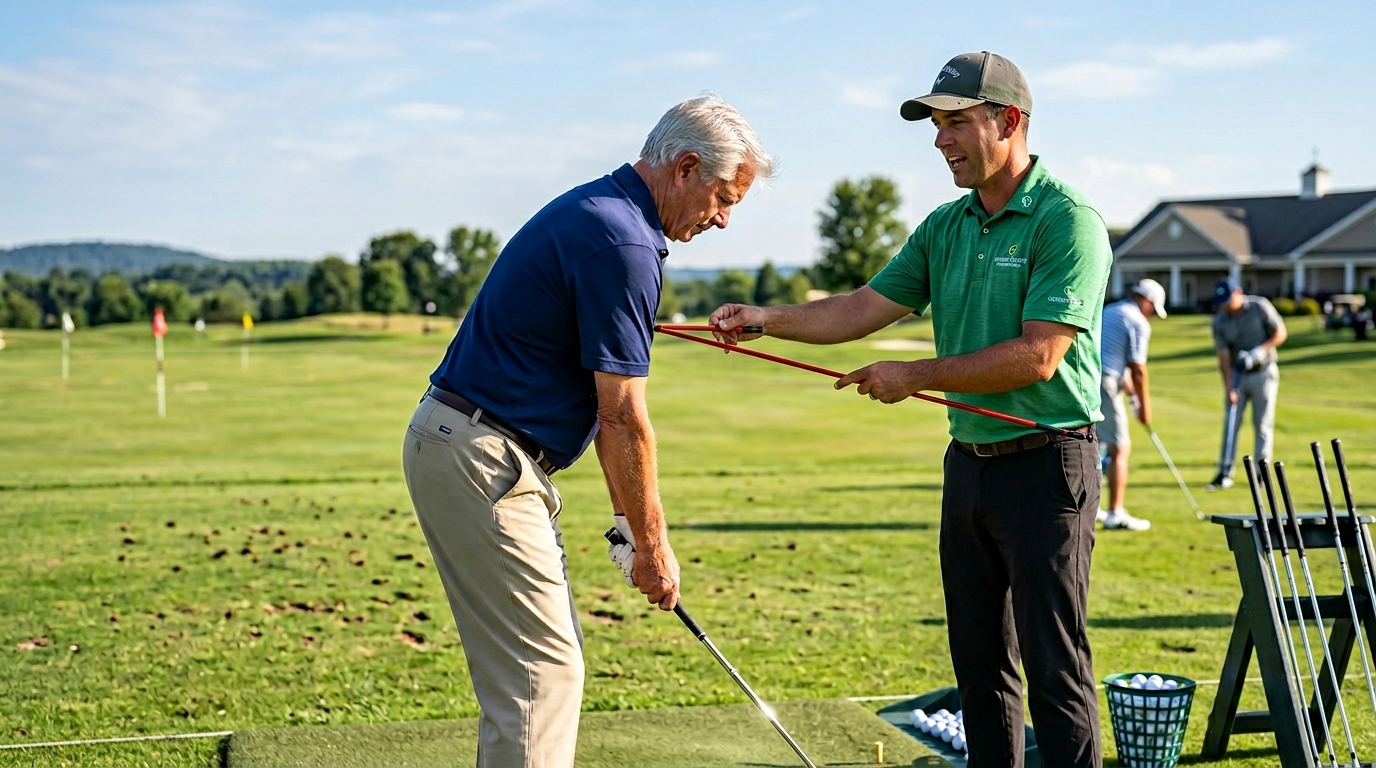
Golf is a game of precision, balance, and repeatable motion, and posture plays a larger role than many golfers realize. For senior players, maintaining proper alignment and body positioning becomes even more important as flexibility and strength change over time. That is why posture correction tips seniors can rely on are essential for improving swing consistency and reducing strain on the body. When posture is correct, everything from balance to ball striking starts to feel more natural.
Although many golfers focus on swing mechanics, posture is often the foundation that determines success. A poor setup can lead to inconsistent shots, loss of power, and even discomfort during a round. However, with the right adjustments, posture correction tips seniors can transform how you approach every shot. Instead of forcing movements, your body begins to work more efficiently, which leads to smoother swings and better results.
Why Posture Matters More as You Age
As the body ages, changes in flexibility, joint mobility, and muscle strength can affect how you stand and move. These changes often lead to rounded shoulders, tighter hips, and reduced spine rotation. Because of this, maintaining proper posture becomes a key factor in preserving both comfort and performance on the golf course.
When posture is off, the swing path becomes harder to control. For example, standing too upright can limit rotation, while hunching forward can restrict arm movement. Therefore, posture correction tips seniors help create a balanced and athletic stance that supports a natural swing motion.
In addition, good posture reduces unnecessary stress on the lower back and neck. Seniors who prioritize alignment often experience less fatigue and fewer aches during and after their rounds. This makes posture not just a performance factor but also a health consideration.
Building a Strong and Balanced Setup
A proper setup starts before the club even moves. One of the most important posture correction tips seniors can apply is creating a stable base. Begin by positioning your feet shoulder-width apart, which provides balance without restricting movement. Then, bend slightly at the hips rather than the waist, keeping your spine neutral.
This slight forward tilt allows your arms to hang naturally, which promotes a more relaxed grip and swing. At the same time, keep your knees softly flexed to maintain stability. This balanced position makes it easier to rotate through the swing without losing control.
Another key detail is weight distribution. Ideally, your weight should be evenly balanced between both feet, with a slight emphasis toward the balls of your feet. This positioning helps you stay grounded while still allowing fluid movement. Over time, practicing these posture correction tips seniors leads to a more reliable and repeatable setup.
Improving Spine Alignment and Shoulder Position
Spine alignment plays a crucial role in swing efficiency. Many golfers unknowingly round their shoulders, which limits rotation and affects ball striking. One of the simplest posture correction tips seniors can follow is to gently pull the shoulders back and down.
This adjustment opens the chest and creates space for a full shoulder turn. As a result, the swing becomes more fluid and less restricted. At the same time, keeping the head steady and aligned with the spine helps maintain balance throughout the motion.
It is also helpful to imagine a straight line running from your head down through your spine. Maintaining this alignment encourages proper posture without feeling forced. With consistent practice, these small changes become natural and improve overall performance.
Enhancing Flexibility for Better Posture
Flexibility directly impacts posture, especially for senior golfers. Tight muscles can make it difficult to maintain proper alignment, which is why stretching and mobility exercises are valuable additions to your routine. While posture correction tips seniors focus on positioning, flexibility supports those positions.
Simple stretches for the hips, hamstrings, and shoulders can make a noticeable difference. For example, loosening the hips allows for a better forward tilt, while improving shoulder mobility supports a fuller turn. These improvements work together to create a more comfortable and effective stance.
Additionally, incorporating light strength exercises helps maintain posture during the entire round. Strong core muscles provide stability, which is essential for balance and control. By combining flexibility with posture correction tips seniors can achieve lasting improvements.
Avoiding Common Posture Mistakes
Even experienced golfers can fall into habits that negatively affect posture. One common mistake is standing too close or too far from the ball. Both positions can disrupt balance and lead to inconsistent swings. Adjusting your distance ensures that your arms hang naturally and your swing path remains smooth.
Another issue is excessive tension. Holding too much tension in the shoulders or arms can interfere with proper posture and swing rhythm. Relaxing your upper body allows for more natural movement and better control.
Additionally, many seniors tend to look up too early during the swing. Keeping your head steady and eyes focused on the ball helps maintain posture and improves contact. By addressing these common mistakes, posture correction tips seniors become even more effective.
Using Posture to Improve Swing Consistency
Consistency is one of the biggest challenges in golf, and posture plays a key role in achieving it. When your setup is correct, your swing becomes more repeatable. This means fewer mishits and more predictable ball flight.
Posture correction tips seniors emphasize creating a reliable starting position. From there, the swing can develop naturally without unnecessary adjustments. Over time, this leads to greater confidence and better results on the course.
Moreover, consistent posture helps with timing. When your body is aligned properly, the sequence of your swing becomes smoother. This improves both accuracy and distance, making each shot more effective.
Adapting Your Posture for Different Clubs
Different clubs require slight adjustments in posture, and understanding these changes can improve performance. For example, shorter clubs often require a more upright stance, while longer clubs benefit from a slightly wider stance and more forward tilt.
These adjustments should feel subtle rather than forced. The goal is to maintain the same fundamental posture while adapting to each club’s length and purpose. By doing so, posture correction tips seniors remain consistent across all shots.
Additionally, paying attention to ball position helps maintain proper alignment. Each club has an ideal ball position that supports the desired trajectory. Combining this with correct posture leads to more effective swings.
Practicing Posture at Home and on the Range
Improving posture does not require constant time on the course. In fact, many posture correction tips seniors can be practiced at home. Using a mirror, for example, allows you to check your alignment and make adjustments.
Practicing your setup regularly helps build muscle memory. Over time, proper posture becomes automatic, which reduces the need for conscious corrections during a round. This makes your game more fluid and enjoyable.
On the range, focus on maintaining posture throughout each swing. Start with slow, controlled movements before increasing speed. This approach reinforces good habits and improves overall consistency.
The Long-Term Benefits of Better Posture
The benefits of good posture extend beyond immediate performance. Over time, posture correction tips seniors can help prevent injuries and reduce physical strain. This allows golfers to continue enjoying the game for years to come.
Improved posture also enhances confidence. When you feel balanced and comfortable, you are more likely to trust your swing. This mental boost can lead to better decision-making and improved results.
Furthermore, better posture supports overall health. Standing and moving correctly reduces stress on joints and muscles, which contributes to long-term well-being. For seniors, this makes posture an essential part of both golf and daily life.
Conclusion
Improving your golf swing does not always require complex changes. Often, the biggest improvements come from refining the basics, and posture is one of the most important fundamentals. By applying effective posture correction tips seniors can enhance balance, control, and consistency on the course.
From building a strong setup to maintaining proper alignment, each adjustment plays a role in creating a more efficient swing. Over time, these changes become second nature, allowing you to play with greater confidence and comfort.
Ultimately, better posture leads to better golf. With consistent practice and attention to detail, seniors can enjoy improved performance and a more rewarding experience every time they step onto the course.
FAQ
- How does posture affect my golf swing?
Proper posture improves balance, alignment, and swing consistency, leading to better contact and accuracy. - What is the ideal stance for senior golfers?
A balanced stance with slight knee flex and a neutral spine helps create a stable and effective setup. - Can posture reduce back pain during golf?
Yes, maintaining correct alignment reduces strain on the lower back and helps prevent discomfort. - How often should I practice posture adjustments?
Regular practice, even at home, helps build muscle memory and improves consistency on the course. - Do different clubs require posture changes?
Yes, small adjustments in stance and tilt help optimize performance for each type of club.