
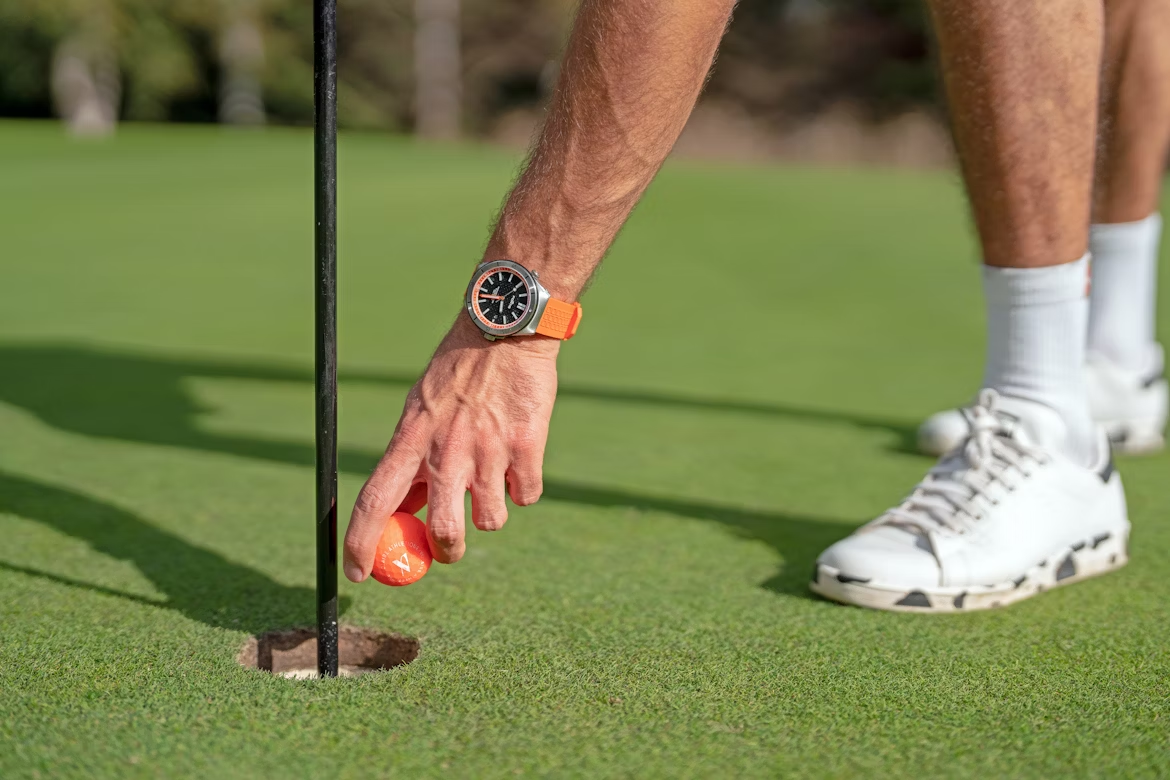
Because the Game Is Won on the Greens
Because the Game Is Won on the Greens
Let’s be honest—distance may fade with age, but putting touch can last a lifetime. For senior golfers, the short game is the great equalizer. With the right senior putting tips, you can outplay younger hitters and save strokes every round. Putting doesn’t rely on flexibility or raw power—it relies on feel, focus, and smart habits.
Whether you’re struggling with speed control or want to drop more 5-footers, these strategies will help you roll the rock like a pro.
Whether you’re struggling with speed control or just want to sink more 5-footers, these senior-friendly putting tips are designed to build confidence, reduce three-putts, and help you roll the rock like a pro.
1. Focus on Speed, Not Just Line
Most missed putts aren’t due to a poor read—they’re due to bad speed. For senior golfers, controlling pace is more important than reading the perfect break.
Try this:
- Practice hitting putts that stop just 12–18 inches past the hole
- Use ladder drills to develop consistent touch
- Favor a softer stroke on fast greens and firmer on slow ones
Why it works: Better speed reduces the number of big comebacks—and the dreaded three-putt.
2. Use a Slightly Longer or Heavier Putter
Many seniors benefit from using a putter that offers more control and stability.
What to look for:
- Heavier heads to steady shaky hands
- Counterbalanced grips for smoother tempo
- Slightly longer shaft (35–38″) for a more upright posture
Result: Less movement, more control.
3. Keep Your Setup Simple and Solid
Consistency starts at address. If your stance, ball position, and posture change from putt to putt, you’ll struggle with accuracy.
Senior-friendly setup tips:
- Stand tall enough to reduce back strain
- Place the ball slightly forward of center
- Keep your eyes directly over the ball
- Use a soft grip pressure—firm enough to guide, not steer
4. Practice with a Purpose
Don’t just hit putts—practice like you’re playing. That’s how you lower your scores.
Try these practice drills:
- The Circle Drill: Place 4 balls around the hole at 3 feet. Make all 4 in a row.
- Gate Drill: Set two tees just wider than your putter to train a square stroke.
- Distance Ladder: Putt to imaginary targets at 10, 20, and 30 feet without going long.
Key tip: Quality beats quantity. Fifteen focused minutes beats an hour of aimless rolling.
5. Embrace a Pendulum Stroke
Avoid wristy or jerky strokes. A smooth, pendulum motion (like a rocking chair) is more repeatable—and easier on the joints.
How to practice it:
- Keep your arms and shoulders connected
- Let your shoulders do the work
- Think “tick-tock” rhythm back and through
Bonus: Reduces tension and builds distance control.
6. Read Greens with Your Feet and Eyes
As vision declines with age, reading greens becomes more about feel than fine detail.
What to do:
- Walk around the putt—don’t just squat from behind
- Feel the slope with your feet
- Picture the ball’s path rolling to the hole, not just the endpoint
Why it helps: Your body reads the slope even when your eyes miss subtle breaks.
7. Use Visual Aids or Lines on the Ball
There’s no shame in using alignment tools. In fact, they help many seniors aim more consistently.
Try this:
- Draw a line on your ball and point it at your target
- Match your putter’s alignment aid to the ball’s line
- Focus on rolling it end-over-end
It keeps things simple and keeps you square.
8. Don’t Be Afraid to Try an Alternate Grip
Struggling with shaky hands or control? Consider experimenting with putting grips like:
- Reverse overlap (standard)
- Claw grip for steadier hands
- Left-hand low to square up the stroke
- Arm-lock style (legal under the rules, great for control)
No grip is perfect for everyone—find what feels stable for you.
9. Develop a Pre-Putt Routine
Routine leads to rhythm. Seniors who struggle with confidence or overthinking benefit from repeating the same process before every putt.
Sample routine:
- Step behind the ball and visualize your line
- Take one or two practice strokes
- Step in, align, and go
Keep it quick. No freezing over the ball.
10. Trust Your Stroke and Let It Roll
The more you second-guess yourself, the more tension creeps in. Commit to your read and stroke with confidence.
Reminder:
- Make your read
- Pick a speed
- Commit 100%
- Don’t worry about the outcome—just make the stroke
Confidence is a skill you can grow at any age.
Conclusion
For senior golfers, putting is the great equalizer. With a calm mind, a simple setup, and a little practice, you can turn your flatstick into a scoring weapon. Whether you’re trying to avoid three-putts or drop more birdies, the tips above are proven to help seniors lower scores without overhauling their game.
Make putting your strength—and start winning the scoring battle on the greens.
FAQs
- What’s the best putter style for senior golfers?
A heavier mallet putter with a thicker grip often helps with stability and control. - Should I use a line on the ball when putting?
Yes. Lining up your putts visually helps improve alignment and confidence, especially for seniors with fading eyesight. - How long should I practice putting each week?
Just 10–15 minutes, 3–4 times a week can significantly improve your feel and distance control. - Is there a grip style that’s better for shaky hands?
The claw or arm-lock grip can reduce wrist movement and steady your stroke. - What’s the most important part of putting for seniors?
Speed control. Managing your distance is the key to avoiding three-putts and making more two-putts or one-putts.